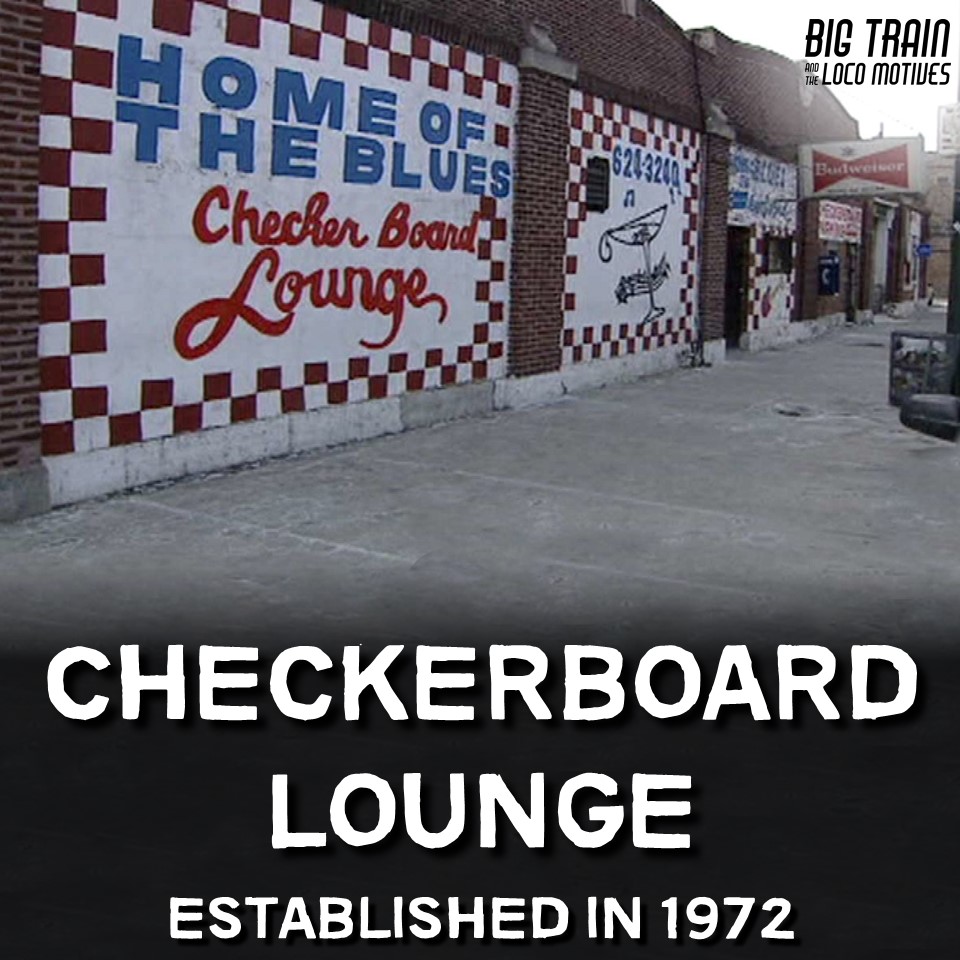
HEY LOCO FANS – The Checkerboard Lounge was more than a nightclub, it was a cornerstone of Chicago’s electric blues tradition, a place where the music lived, evolved, and occasionally caught fire right in front of you.
When Buddy Guy and promoter L.C. Thurman opened the club in 1972 at 423 E. 43rd Street in Bronzeville, they tapped into a lineage that stretched back decades. Chicago’s South Side had long been the destination for musicians migrating north from the Mississippi Delta, artists who electrified their sound to match the city’s energy. By the early 1970s, some of the classic venues that once hosted these pioneers had disappeared, leaving a gap the Checkerboard Lounge would fill with grit and authenticity.
From the beginning, the club earned its reputation as “the home of the blues,” not through marketing, but through the steady presence of the musicians who defined the genre. Muddy Waters, Junior Wells, James Cotton, Willie Buck, and Lefty Dizz were not occasional guests, they were part of the club’s living fabric. The Checkerboard’s small, intimate setting meant audiences didn’t just hear the blues, they felt it up close, with every note echoing off the walls.
What set the Checkerboard apart was its unpredictability. Touring musicians often found their way there after larger shows, drawn by the authenticity of the room. Artists like Eric Clapton, Stevie Ray Vaughan, Chuck Berry, and Robert Plant all appeared on its stage, sometimes unannounced, blending seamlessly with the local talent that sustained Chicago’s blues scene.
One night in particular cemented the club’s place in music history. On November 22, 1981, members of The Rolling Stones walked into the Checkerboard after a concert and joined Muddy Waters onstage. Mick Jagger, Keith Richards, and their bandmates didn’t just sit in, they immersed themselves in the music that had inspired them. The performance, captured and later released as *Live at the Checkerboard Lounge, Chicago 1981*, remains one of the most vivid documents of blues and rock intersecting in an unfiltered setting.
In 1985, Buddy Guy left the partnership to open Buddy Guy’s Legends, leaving Thurman to guide the Checkerboard through the following decades. The club continued to operate as a vital hub for traditional Chicago blues, even as musical trends shifted and audiences changed.
By 2003, structural issues and financial pressures forced the Checkerboard to relocate to 5201 S. Harper Court in Hyde Park. The move brought the club closer to the University of Chicago and introduced the blues to a new generation, but it also marked a departure from the original South Side environment that had shaped its identity.
After more than four decades, the Checkerboard Lounge closed in 2015 following the death of L.C. Thurman. Its legacy, however, remains firmly embedded in Chicago’s cultural history. The club stood as a bridge between eras, connecting the pioneers of electric blues with modern audiences and international stars. It was a place where the music was never staged for show, it simply happened, raw, immediate, and unforgettable.
Muddy Waters & The Rolling Stones
Baby Please Don’t Go – Live At Checkerboard Lounge
Related Posts