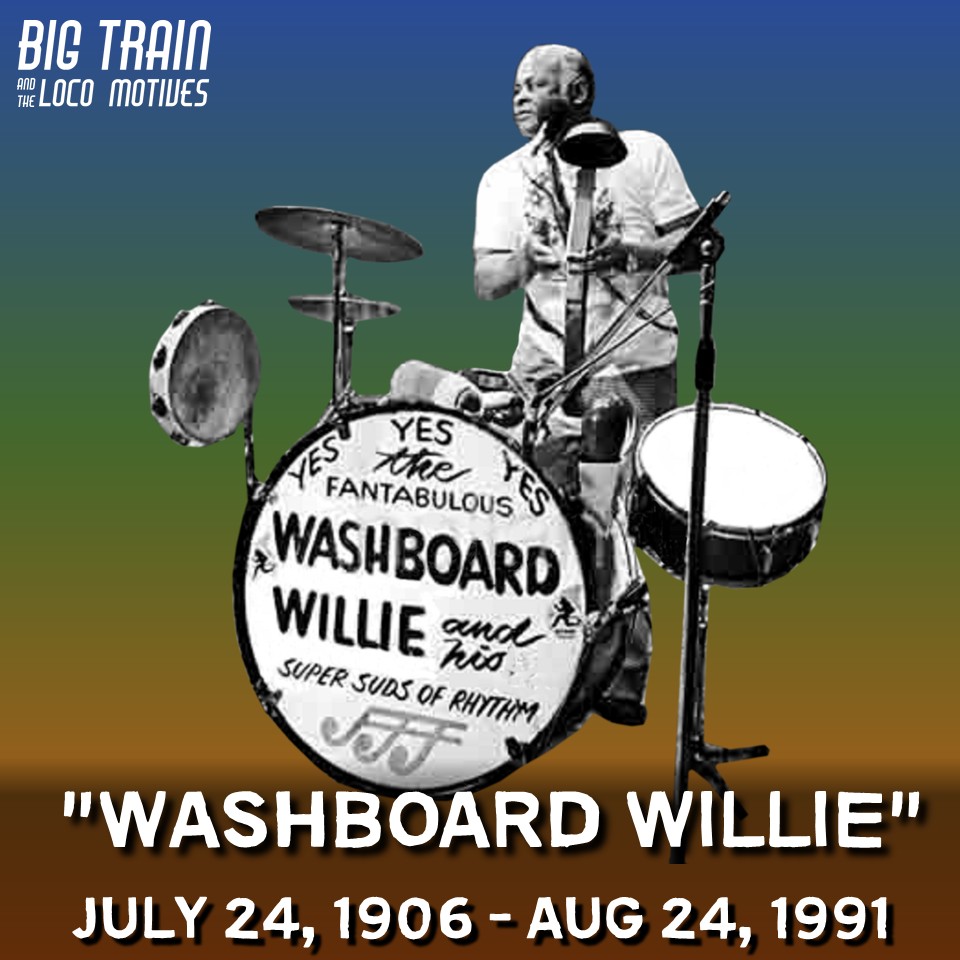
HEY LOCO FANS – Born William Paden Hensley on July 24, either in 1906 or 1909, Washboard Willie became one of the most colorful figures in Detroit blues. Sources disagree whether he was born in Bullock County, Alabama, or Columbus, Georgia, but all agree that he transformed the humble washboard into a dynamic rhythm instrument that energized countless blues performances. His inventive style, booming personality, and relentless work ethic made him a fixture of Detroit’s postwar blues scene for nearly three decades.
 Unlike many blues musicians who began performing in childhood, Hensley did not pursue music seriously until his thirties. Growing up, he enjoyed the traveling tent shows, minstrel acts, and vaudeville performances that passed through his community, developing a love for percussion long before he picked up a washboard. Around 1948, he moved to Detroit in search of better opportunities, earning a living washing cars while absorbing the city’s thriving blues culture.
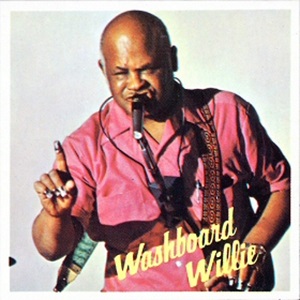 A chance encounter in 1952 changed his life. While watching Eddie “Guitar” Burns perform at Detroit’s Harlem Inn, Willie noticed the drummer struggling to keep time. He retrieved the washboard from his car and began playing along with the band. The club owner was so impressed that Burns’ group was immediately offered a long-term residency with Willie as part of the act. That opportunity launched his professional career and established him as one of Detroit’s most distinctive rhythm players.
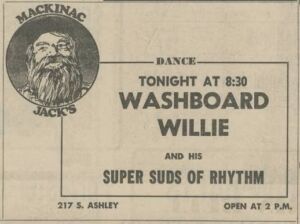
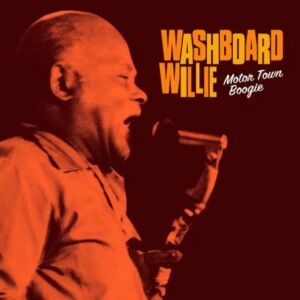 Working days at an automobile company, Willie named his own band Washboard Willie and the Super Suds of Rhythm, borrowing the title from a popular laundry detergent. Never satisfied with convention, he expanded the washboard’s role by adding a bass drum, snare drum, frying pan, and metal thimbles worn on his fingers, creating a one-man percussion section unlike anything audiences had seen. In 1955, he also gave harmonica player Little Sonny his first professional booking, helping launch another Detroit blues career.
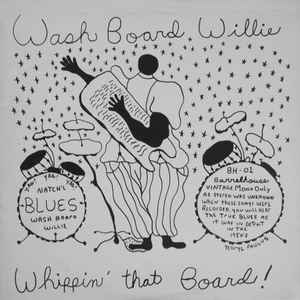
 Willie recorded extensively with Eddie “Guitar” Burns, Baby Boy Warren, Boogie Woogie Red, and Calvin Frazier while making his own memorable sides, including “Cherry Red Blues,” “Washboard Shuffle,” “Washboard Blues,” “A Fool on a Mule in the Middle of the Road,” “Natural Born Lover,” and “Wee Baby Blues.” Many recordings made for Joe Von Battle between 1956 and 1962 remained unreleased until George Paulus issued them years later on Barrelhouse Records, allowing a new generation of blues fans to discover his work.
By the early 1970s, Washboard Willie had become one of Detroit’s best-known blues entertainers. In 1973, he toured Europe with the American Blues Legends package alongside Lightnin’ Slim, Snooky Pryor, Homesick James, Whispering Smith, and Boogie Woogie Red. That same year he appeared at the Ann Arbor Blues and Jazz Festival, helping introduce Detroit blues to wider audiences. He retired from regular performing in 1979 and devoted more time to family and church, where he served as a Sunday school teacher.
Washboard Willie died in Detroit on August 24, 1991. Though never a national star, his inventive percussion style, infectious stage presence, and dedication to Detroit blues ensured his place among the city’s most beloved musicians. His music remains a joyful reminder that even the simplest household tool can become a powerful instrument in the hands of a gifted bluesman.
Washboard Willie – “After Hours” (pts 1 & 2)
Washboard Willie: vocals, washboard, drums / Calvin Frazier: guitar / Chuck Smith: bass / Boogie Woogie Red: piano
Related Posts