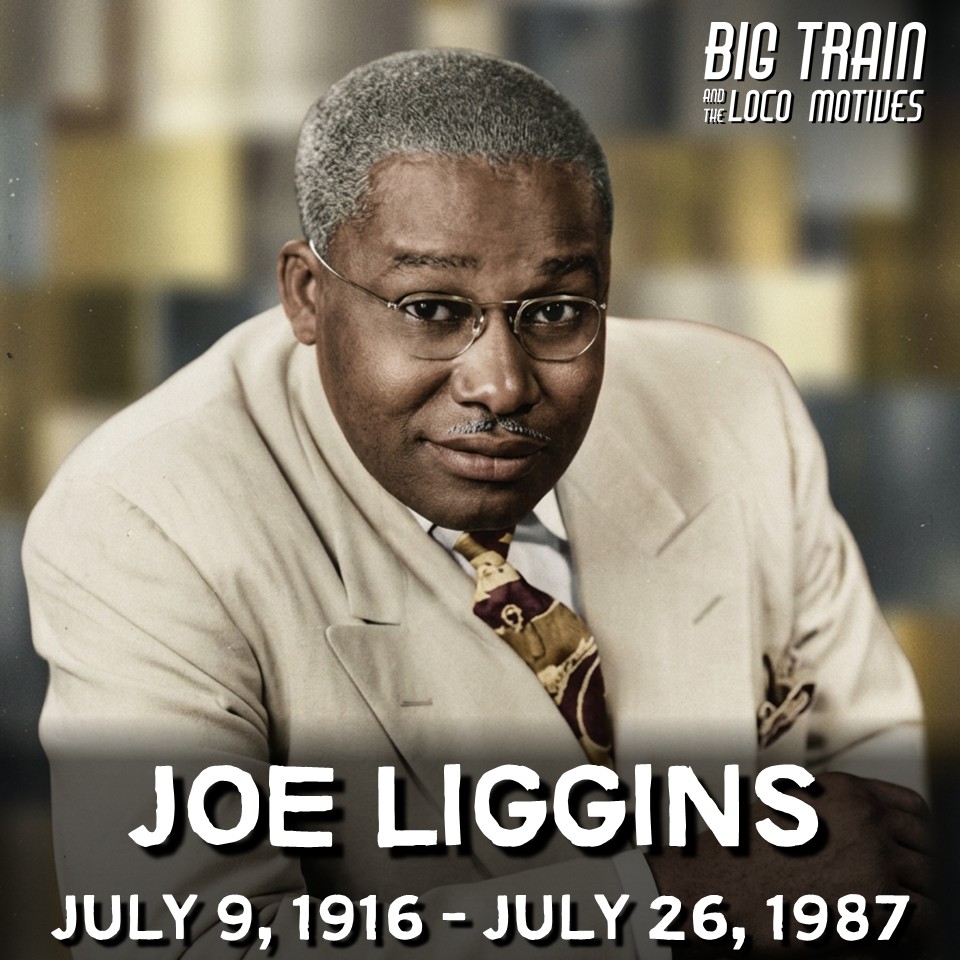
HEY LOCO FANS – Joe Liggins was one of the principal architects of postwar jump blues, creating a sophisticated, danceable sound that helped bridge the gap between big-band swing and the rhythm and blues that would evolve into rock and roll. Born Theodro Elliott on July 9, 1916, in Seminole, Oklahoma, he later adopted his stepfather’s surname and the name Joseph Christopher Liggins. His younger brother, Jimmy Liggins, would also become an influential R&B recording artist.
 Liggins moved with his family to San Diego, California, in 1932, where he graduated from Hoover High School and studied music at San Diego State College. He developed into a skilled pianist, arranger, and bandleader, writing charts for local groups and performing with ensembles including the Creole Crusaders before relocating to Los Angeles in 1939. There he joined Sammy Franklin’s California Rhythm Rascals, an experience that proved pivotal to his career.
While with Franklin, Liggins composed “The Honeydripper,” a tune inspired in part by the traditional melody “Shortnin’ Bread” and the lively dance culture flourishing along Los Angeles’ Central Avenue. When Franklin declined to record the song, Liggins assembled his own group, Joe Liggins and His Honeydrippers, and convinced Exclusive Records owner Leon René to record it. Because the performance was too long for one side of a 78 rpm record, it was split into two parts. Recorded on April 20, 1945, the record became an immediate sensation.
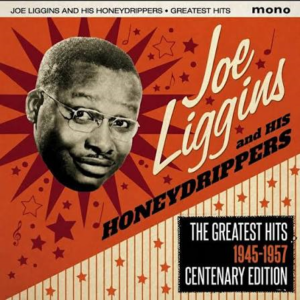 “The Honeydripper” spent 18 consecutive weeks at No. 1 on Billboard’s Race Records chart, tying the record later matched by Louis Jordan’s “Choo Choo Ch’Boogie.” It also crossed over to the pop charts and sold an estimated two million copies, establishing Liggins as one of the leading figures of the booming Los Angeles rhythm and blues scene. The success launched a remarkable string of hits for the Honeydrippers, including “Got a Right to Cry,” “Sugar Lump,” “Tanya,” “Roll ‘Em,” “Little Willie,” “Drippers’ Boogie,” and “Blow Mr. Jackson.”
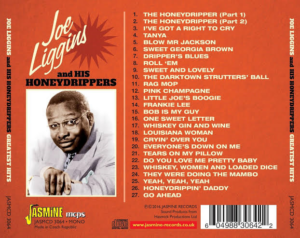 In 1950, Liggins signed with Specialty Records, where he enjoyed another career-defining success with “Pink Champagne.” The record topped the R&B chart for 13 weeks and became one of the era’s biggest crossover hits, reaching the pop charts as well. Other successful Specialty releases included “Rag Mop,” “Little Joe’s Boogie,” and “Frankie Lee.”
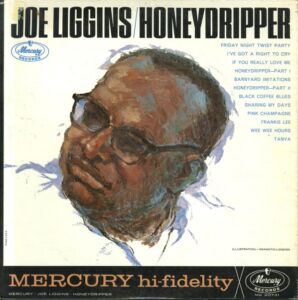 Liggins’ polished blend of blues, jazz, boogie-woogie, and swing became a blueprint for countless jump blues and early R&B performers. His music emphasized tight horn arrangements, infectious piano rhythms, and smooth vocals, influencing artists who helped shape the sound of early rock and roll. In 1946, Billboard described his recording “Sugar Lump” as “right rhythmic rock and roll music,” one of the earliest documented uses of the phrase years before the genre became firmly established.
Although his commercial success faded as musical tastes shifted during the late 1950s, Liggins continued performing for decades, leading versions of the Honeydrippers and enjoying renewed appreciation during the blues revival. He remained an admired elder statesman of jump blues until suffering a stroke in July 1987. Joe Liggins died on July 26, 1987, in Lynwood, California, leaving a legacy as one of the musicians who transformed blues and swing into the energetic rhythm and blues that paved the way for rock and roll.
Joe Liggins & The Honeydrippers – “The Honeydripper”
Joe Liggins & The Honeydrippers performing “The Honeydripper” in Los Angeles 1983.
Related Posts