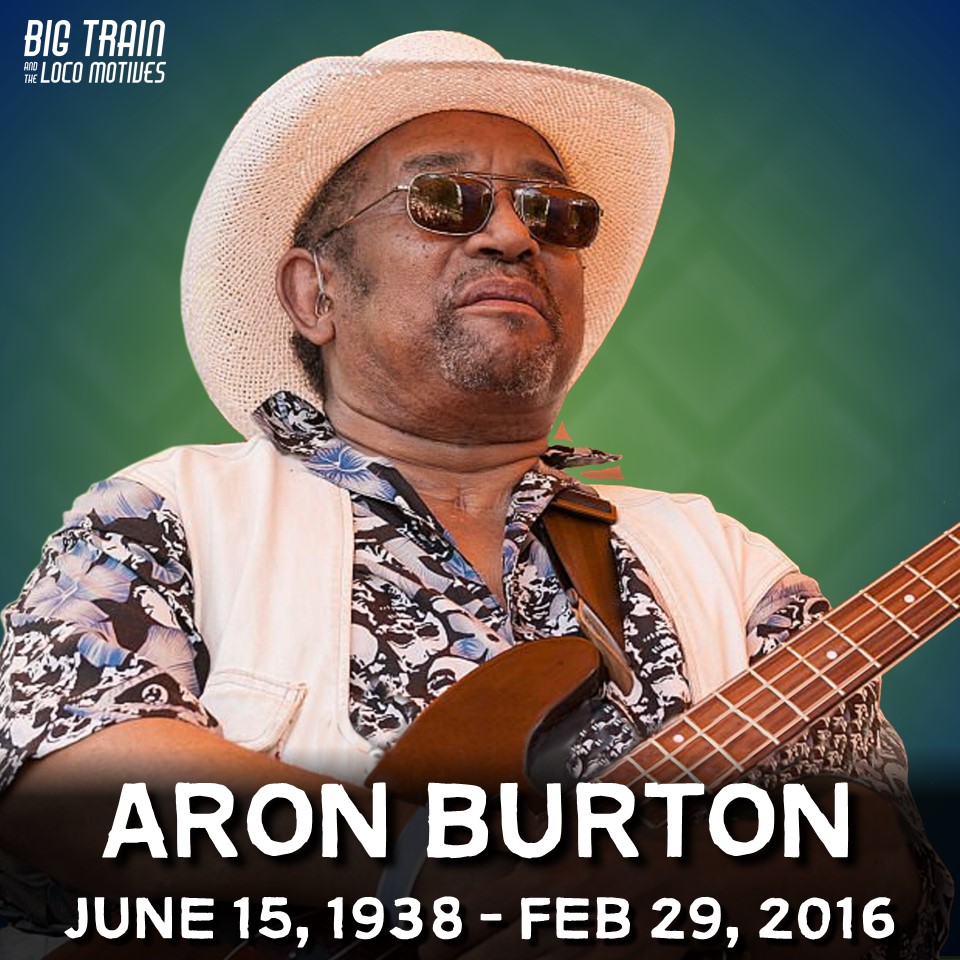
HEY LOCO FANS – Chicago blues singer, bassist, and songwriter Aron Burton was born on June 15, 1938, in Senatobia, Mississippi. Although widely respected as one of Chicago’s finest bass players, Burton spent much of his career supporting blues legends before finally receiving recognition as a bandleader. His deep, soulful voice, impeccable timing, and steady bass work made him one of the most dependable musicians on the Chicago blues scene. Over a career that spanned nearly six decades, his recordings earned four nominations for the Blues Music Award in the Blues Instrumentalist, Bass category.
 Burton’s musical roots were planted in gospel music. As a child he sang in local churches and helped form a gospel quartet called the Victory Travelers with his cousin, Ruben Burton, a group that continued performing long after Aron moved north. Seeking greater opportunities, he relocated to Chicago in 1955, arriving just as the city’s electric blues scene was flourishing. The following year he landed his first professional job with Freddie King, who believed in the young musician enough to buy Burton his first bass guitar, launching a career that would place him alongside many of the greatest names in blues.
Military service interrupted his musical career when he joined the United States Army from 1961 until 1965. After returning to Chicago, Burton quickly became an in-demand bassist, performing with Baby Huey & the Babysitters, Junior Wells, and Fenton Robinson. Between 1969 and 1972 he toured extensively with Junior Wells while also contributing to recording sessions by artists including George “Wild Child” Butler, Jackie Ross, Andrew “Blueblood” McMahon, and Carey Bell. During this period he also released the single “Garbage Man,” offering an early glimpse of his talents as both a singer and songwriter.
 A major turning point came in 1978 when Burton joined his brother, guitarist Larry Burton, in Albert Collins’s celebrated backing band, the Icebreakers. Burton’s powerful bass playing became an essential ingredient on Collins’s Grammy Award-nominated album Ice Pickin’, one of the defining electric blues recordings of its era. He continued touring with Collins into the early 1980s while simultaneously working as a horticulturist at Chicago’s Garfield Park Conservatory, a position he held for approximately twenty years. Away from Collins’s band, Burton remained a sought-after sideman, performing with James Cotton, Johnny Littlejohn, Jimmy Witherspoon, Big Jack Johnson, Billy Boy Arnold, Eddy Clearwater, and numerous other blues artists.
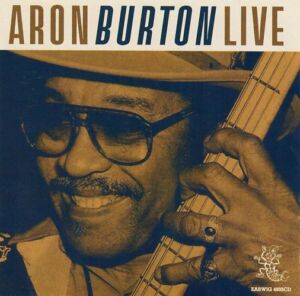
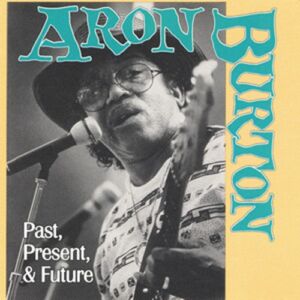
During the late 1980s Burton spent time in Europe, where he recorded with the legendary pianist Champion Jack Dupree. After returning to Chicago, Earwig Records issued Past, Present, & Future in 1993, a compilation that showcased recordings made on both sides of the Atlantic and established Burton as more than simply a sideman. His reputation continued to grow through appearances at the Chicago Blues Festival, where he often performed alongside singer Liz Mandeville. Their collaboration carried over to Aron Burton Live, recorded at Buddy Guy’s Legends and released in 1996.
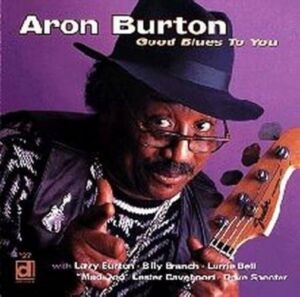
 In 1999 Burton released Good Blues to You on Delmark Records, widely regarded as the finest album of his solo career. The recording highlighted his relaxed yet commanding vocals, tasteful songwriting, and understated bass playing while featuring his brother Larry on guitar. Burton later issued The Cologne Sessions in 2001 and continued contributing to recordings by other artists. He also co-wrote a song recorded by Too Slim and the Taildraggers on their 2000 album King Size Troublemakers. Over his career he appeared on more than thirty albums and performed at nearly every Chicago Blues Festival during its first three decades.
Burton gradually retired from regular performing around 2014 after decades as one of Chicago’s most respected musicians. He died at his Chicago home on February 29, 2016, at the age of 77, with heart disease and diabetes contributing to his death. Though he never achieved the commercial fame of many artists he supported, fellow musicians and blues fans remember Aron Burton as one of Chicago blues’ most reliable bassists, an expressive vocalist, and a consummate professional whose quiet excellence helped shape countless classic recordings.
Aron Burton – Chicago Blues Festival
Aron Burton (bass), Larry Burton (guitar), Allen Batts (piano), Dave Jefferson (drums). June 6, 1997
Related Posts