
Elmore James and “The Sky Is Crying”, The Chicago Rainstorm That Became a Blues Classic
Recorded November 1959 | Chicago, Illinois | Fire Records
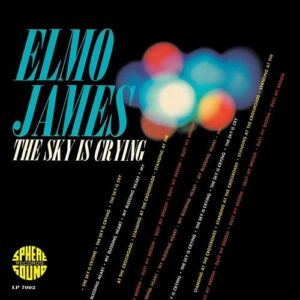 Some blues songs are born from heartbreak, some from hard living, and others from a bottle of whiskey that probably should have stayed on the shelf. Elmore James found inspiration in something considerably more ordinary: a Chicago rainstorm.
In November 1959, the Mississippi-born bluesman recorded “The Sky Is Crying,” a song that would become one of the most enduring standards in electric blues history. The recording date is generally identified as November 3 or 4, although surviving discographical evidence has not established which day was correct.
James was already famous for his explosive slide guitar and powerful vocals. His 1951 recording of “Dust My Broom,” released by Trumpet Records, had established a signature sound that countless guitarists would spend decades trying to reproduce. By 1959, however, James needed another hit. Enter New York record producer Bobby Robinson, a Chicago downpour, and a little musical inspiration.
A Song Written While the Rain Came Down
Robinson had traveled to Chicago to record James for his Fire label. According to Robinson’s later recollection, he discovered James performing at a South Side club and arranged a recording session.
On the day of the session, rain poured across Chicago. Robinson remarked on the weather, and James observed that the sky looked as though it was crying.
Robinson immediately recognized the makings of a blues song.
The two reportedly began developing the number, which James and his band recorded that same day. Although James received the original songwriting credit, Robinson later described himself as participating in its creation.
That distinction matters. The rainstorm story comes from Robinson’s recollections, not a surviving transcript of the session. Nevertheless, it remains one of the better-known stories behind a blues standard.
The Broomdusters Bring the Thunder
James recorded the song with his longtime backing group, the Broomdusters, musicians who helped define the sound of Chicago’s postwar electric blues.
Little Johnnie Jones played piano, J.T. Brown supplied tenor saxophone, and Homesick James handled bass guitar. Odie Payne Jr. is generally credited with drums, although bluesman Sam Myers later claimed to have played on the recording.
Some discographies also suggest that saxophonist Boyd Atkins and bassist Ransom Knowling may have participated. Those additional credits remain uncertain.
Then there was Elmore’s guitar.
His slide work on “The Sky Is Crying” sounds almost like a second vocalist, answering his anguished singing with long, trembling notes. The unusually rich tone has generated debate among musicians and historians. Homesick James attributed part of the sound to recording techniques, while guitarist Ry Cooder suspected James was using a different instrument than his familiar amplified Kay acoustic.
Whatever the equipment, the result was unmistakably Elmore James.
From a Rainy Afternoon to the R&B Charts
Released in 1960 as Fire Records 1016, the single was credited to “Elmo James and His Broomdusters.” Its flip side was “Held My Baby Last Night.”
Discographical records identify the two sides with matrix numbers FM 133 and FM 134.
“The Sky Is Crying” reached No. 15 on Billboard’s Hot R&B Sides chart, giving James his final chart appearance during his lifetime.
The recording became a lasting part of the blues repertoire. Albert King offered a distinctive version on his 1969 album Years Gone By, replacing James’s slide approach with his own expressive fretted-guitar style.
Stevie Ray Vaughan subsequently made the song a regular concert favorite. Vaughan and Double Trouble recorded studio versions during the 1980s, but his interpretation did not appear on the posthumous album The Sky Is Crying until 1991.
That same year, the Blues Foundation inducted James’s original recording into its Blues Hall of Fame as a Classic of Blues Recording.
James had died of a heart attack in Chicago on May 24, 1963, at the age of 45. He never witnessed the full influence his rainy-day recording would have on generations of blues guitarists.
Key Dates & Songs
-
January 27, 1918: Elmore James born in Richland, Mississippi.
-
1951: Records “Dust My Broom” for Trumpet Records.
-
1952: “Dust My Broom” becomes a national R&B hit.
-
November 3 or 4, 1959: Records “The Sky Is Crying” in Chicago.
-
1960: Fire Records releases “The Sky Is Crying,” which reaches No. 15 on Billboard’s R&B chart.
-
1960: Records “Shake Your Moneymaker,” another enduring blues classic.
-
May 24, 1963: James dies in Chicago at the age of 45.
-
1965: “It Hurts Me Too” charts posthumously.
-
1969: Albert King records “The Sky Is Crying” for Years Gone By.
-
1991: Stevie Ray Vaughan’s version is released posthumously, and James’s original enters the Blues Hall of Fame.
-
1992: Elmore James is inducted into the Rock & Roll Hall of Fame.
Why He Matters
Elmore James didn’t invent slide guitar, and he wasn’t the first musician to electrify Delta blues. What he did was make that combination impossible to ignore.
His heavily amplified guitar, aggressive attack, and emotionally charged singing helped establish the vocabulary of modern electric slide guitar. Players including Hound Dog Taylor, Duane Allman, Jeremy Spencer, and countless others built upon his approach.
“The Sky Is Crying” demonstrates another side of his talent. Rather than relying on the driving riff associated with “Dust My Broom,” James used sustained slide notes, carefully placed phrases, and a slow blues arrangement to communicate heartbreak.
The song’s journey from James to Albert King, Stevie Ray Vaughan, and later generations illustrates how blues traditions survive through reinterpretation.
Nearly seven decades after that Chicago recording session, guitarists are still playing “The Sky Is Crying.” The weather may have cleared, but the blues never did.
Elmore James – “The Sky Is Crying”
His Broomdusters backed that unforgettable slide guitar, and the 1960 Fire single reached No. 15 on the R&B chart.
Related Posts